
Palma Markets
Carlos E. Vallejo
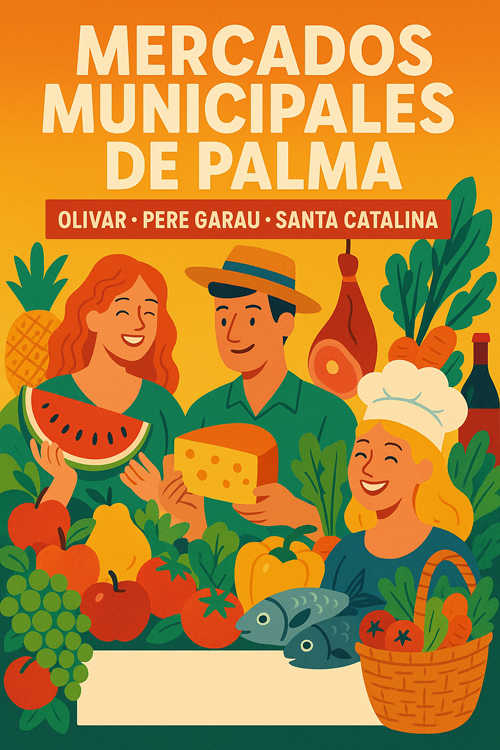
Color, joy, diversity, local produce—these and many more are the experiences you’ll find in Palma’s municipal markets.
Mercado del Olivar
Undoubtedly the best known and best located, very close to Plaza de España, it’s divided into two sections:
The fish area, where you’ll find the best local fish in Mallorca. It smells of the sea, the selection is extensive and expensive, and quality isn’t cheap. You can even buy your fish and have it cooked for you at one of the market’s restaurants.
In the adjacent building, you’ll find the fruits and vegetables, with a special mention for the vibrant colors and the excellent presentation of the produce. The remaining stalls are meat shops, bakeries, delicatessens, and several bars where you can enjoy a wonderful Spanish tradition called “tomar el aperitivo” (having an aperitif), which I’ll briefly explain.
The aperitif hour, from 1:00 PM until 2:00 PM at the latest, is a time for leisure and enjoyment with family and friends. The quintessential drink is Spanish vermouth, red or white, though beer or wine, especially white, are also acceptable. Cava and champagne are also popular, and Aperol is a favorite among the German population.
The idea is to have a pleasant conversation while drinking and eating tapas, preferably local specialties.
Pere Garau Market.
The humblest and most authentic of them all. It’s located in a neighborhood where intercultural exchange has created a melting pot, where Muslims live alongside Latin Americans and Mallorcans.
For many years, it was a meeting point where farmers sold their fruits and vegetables outdoors. This concept has declined considerably in recent years. In reality, only about 10% maintain this tradition. The remaining stalls outside sell fruits and vegetables from the mainland, purchased from the Mercapalma wholesale market, and Chinese textiles, primarily run by Roma people.
The interior is different, offering local produce at good prices and quality. It’s worth a visit, as it feels more authentic than the other markets.
Santa Catalina Market
Located in a former fishing quarter, the area has been completely transformed, now home to Swedish and German communities, which have lost much of the traditional Mallorcan character of yesteryear.
Despite this evolution, it remains a vibrant area with a lively social scene, where bakeries run by foreigners catering to tourists abound.
Inside, the stalls are the best maintained. The selection is varied and carefully curated, featuring gourmet products at high prices. There are also tapas bars with excellent products.
To conclude my mention of Palma’s markets, I’ll mention a very small organic fruit and vegetable market held on Tuesdays and Saturdays in Plaça de les Patines in Palma.


